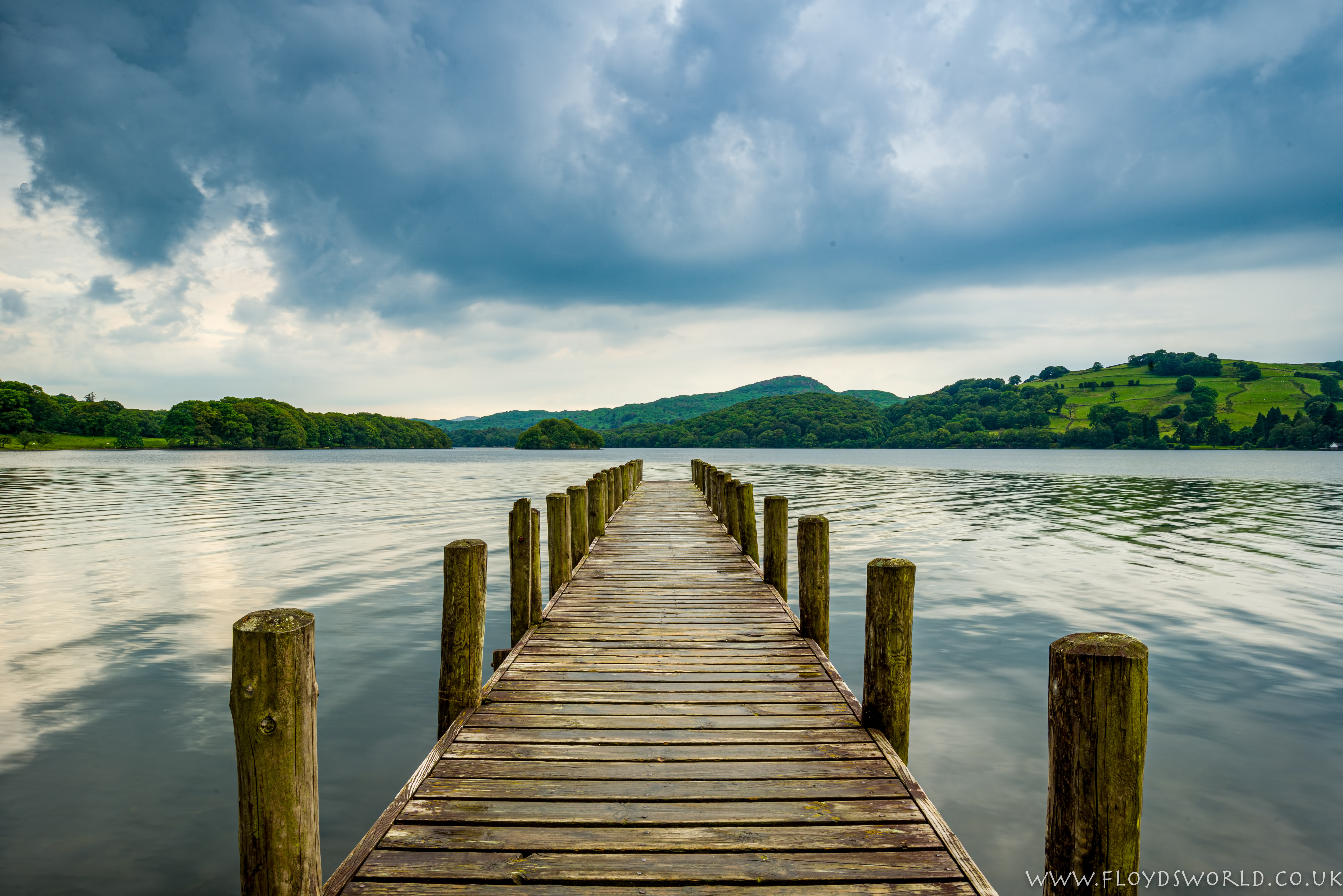
Coniston Water in the English county of Cumbria is the third-largest lake in the Lake District by volume (after Windermere and Ullswater), and the fifth-largest by area.[1] It is five miles long by half a mile wide (8 km by 800 m), has a maximum depth of 184 feet (56 m), and covers an area of 1.89 square miles (4.9 km2). The lake has an elevation of 143 feet (44 m) above sea level. It drains to the sea via the River Crake.
Crummock Water is a lake in the Lake District in Cumbria, North West England situated between Buttermere to the south and Loweswater to the north. Crummock Water is 2.5 miles long, 0.75 mile wide and 140 feet deep. The River Cocker is considered to start at the north of the lake, before then flowing into Lorton Vale. The hill of Mellbreak runs the full length of the lake on its western side; as Alfred Wainwright described it ‘no pairing of hill and lake in Lakeland have a closer partnership than these’.
“The meaning of ‘Crummock’ seems to be ‘Crooked one’, from British” (Brythonic Celtic) “‘crumbaco’-‘crooked'”.[1]
This may refer to the winding course of the River Cocker, which flows
out of the lake, or refer to the bending nature of the lake itself. The
word “‘water’ is the main Lakeland term for ‘lake'” [1]
The lake is owned by the National Trust. Scale Force, the highest waterfall in the Lake District, feeds the lake and has a drop of 170 feet.[2]
Water from the lake is treated at Cornhow water treatment works, near Loweswater,[3] and is distributed to the towns of Silloth-on-Solway, Maryport, Workington, Whitehaven, and many smaller towns, villages, and hamlets in the surrounding area for drinking and all other uses.[4]
Crummock Water gained attention in 1988 when the body of Sheena
Owlett was found in the lake. It later transpired she had been murdered
in Wetherby, West Yorkshire.
Buttermere is a lake in the English Lake District in North West England. The adjacent village of Buttermere takes its name from the lake. Historically in Cumberland, the lake is now within the county of Cumbria. It is owned by the National Trust, forming part of its Buttermere and Ennerdale property. Wikipedia
Mardale is a glacial valley in the Lake District, in northern England. The valley used to have a hamlet at its head, called Mardale Green, but this village was submerged in the late 1930s when the water level of the valley’s lake, Haweswater, was raised to form Haweswater Resevoir by Manchester Corporation.Wikipedia